A vision for connected systems
Summer 2024 – Early 2025
This page is divided into a few sections:
An extremely brief summary of my work on the project.
A brief summary of my specific contributions to the effort.
A full explanation of the project, from inception to where I stepped away, and where it went from there.
Extremely brief summary
I led the creation of one vision for “connected systems”, which helped product management leadership prioritize and jumpstart a coordinated effort to make it happen, and then used those learnings to support UXR in two pivotal rounds of strategic research.
What I contributed
Led the creation of a vision that interconnects one of the most important workflows within our customer base (which is currently split and requires manual effort to move between siloes) – taking a donation all the way through fund disbursement.
Met with designers, product managers, engineers, and architects to understand exactly how the individual pieces worked at present, where we had opportunities to connect them into one system, and what would be required to make that happen.
Iterated on the model of the system and the presentation of the model multiple times throughout these conversations to build the clearest pictures possible.
I presented those models, as well as others, to our Chief Product Officer, and used those conversations to drive action within different parts of Blackbaud –
On the more tactical level to get more focused work underway for creating the possibility for the particular flow I’d outlined
On the more strategic level to get more teams thinking about connected systems more often.
Worked as the central designer involved in a coordinated effort with design research to conduct two rounds of strategic discovery to learn from customers and potential customers about opportunities around packaging our solutions as sets of modular capabilities instead of rigid features, as well as the role the advent of contemporary AI thinking might play into that story.
Helped analyze the output of those discovery efforts, and present them out to the organization.
The whole story –
Background
The Blackbaud design team has been talking for years in one form or another about the necessity of a “connected system”, under different names like One Blackbaud or Total Cloud Solution, but always broadly the same strategy. We control a sprawling suite of products which are sometimes redundant, and sometimes extremely cooperative in feature scope, but siloed or confusingly integrated for customers. A new Chief Product Officer coming into Blackbaud offered a fresh opportunity to dive into working strategically at a large scale to move towards connected systems, but where to start was not immediately clear.
Initial vision
I led the creation of a particular vision illustrating the value of more deeply connected systems. Below this paragraph are two visuals which represented the output of sitting with designers, product managers, and architects across our two most popular products to understand the breakdowns in one core process for non-profits that’s easy to conceptualize: how a donation moves from a donor, through the bank, to the organization they’ve donated to. When we started, parts of the process were manual, and included a user downloading a .pdf from our first party payment processor and reconciling it against gifts themselves. The gifts themselves then needed to be manually posted from the fundraising software to the financial software. I illustrated that full flow, breakdowns included, as a system as well as a user journey, and then illustrated how those processes would be improved in a world where these two products have been blended into one holistic set of capabilities.
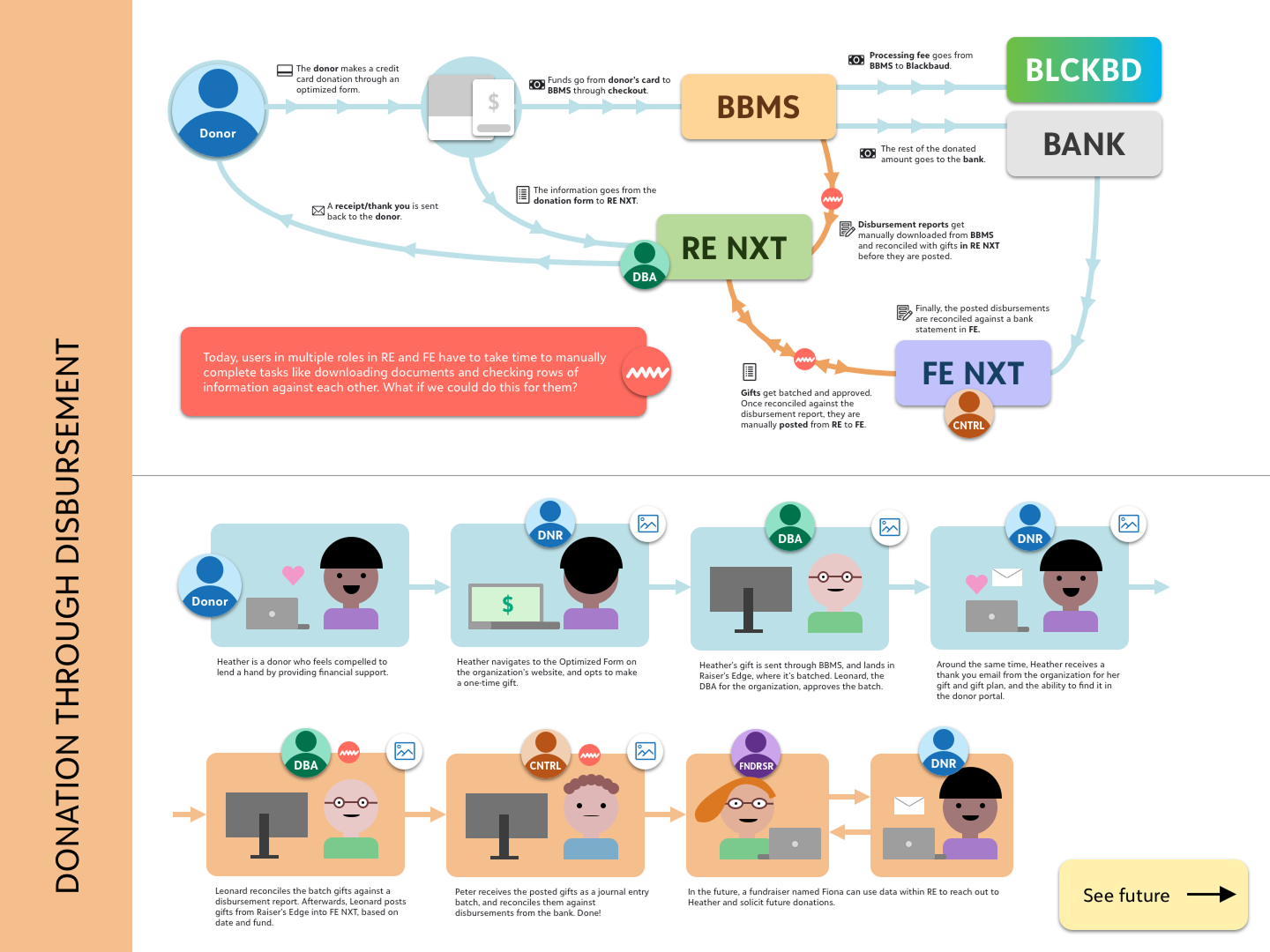
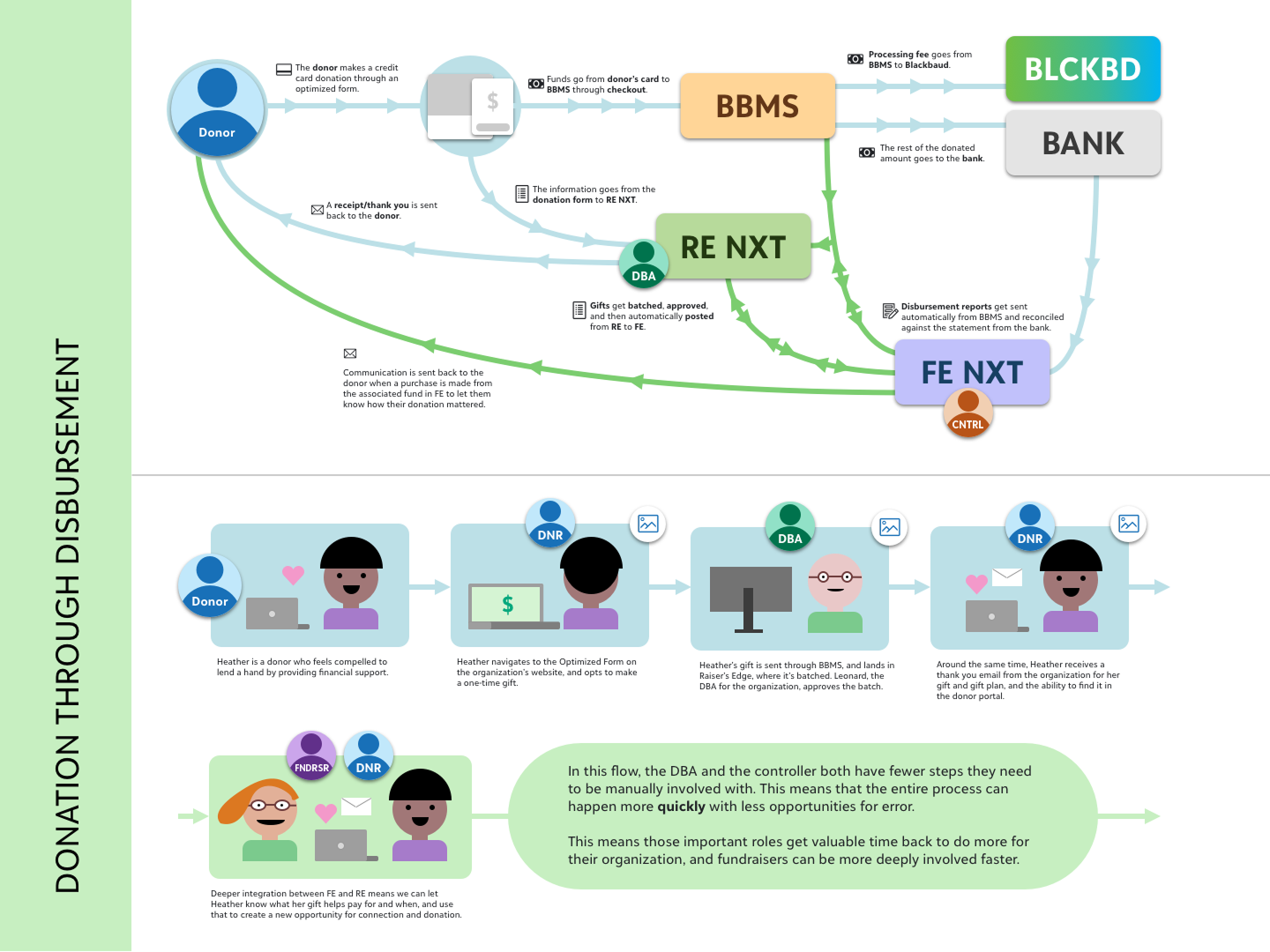
From there, I got to take the show on the road. After reviewing the vision with the teams I’d worked with to understand the pieces in order to ensure its validity, and with design leadership, the vision was presented to our CPO and product management leadership across products. Following these conversations, two efforts kicked off: (1) The PMs over these areas were asked to get together and define exactly where the uncoupled parts of the process are today, and what would be needed on a technical and user workflow level to bring them together. (2) An opportunity appeared to broaden and deepen this effort by understanding how our customers, or potential customers, do or do not resonate with the ideas behind a connected system, and how they value that model versus the collection of well-defined products we have today.
Design for discovery – Round 1
I worked with a really brilliant researcher to brainstorm, plan, execute, digest, and read out two rounds of discovery that included concept validation, competitive analysis, and deep qualitative discussions. The first round asked participants to weigh our current product catalog, as well as the experience we offer for a person trying to understand the pieces of it, against competitor experiences today, and then asked them to walk through a broad vision of a potential future experience where they could define their needs as an organization, and have a custom package presented to them.
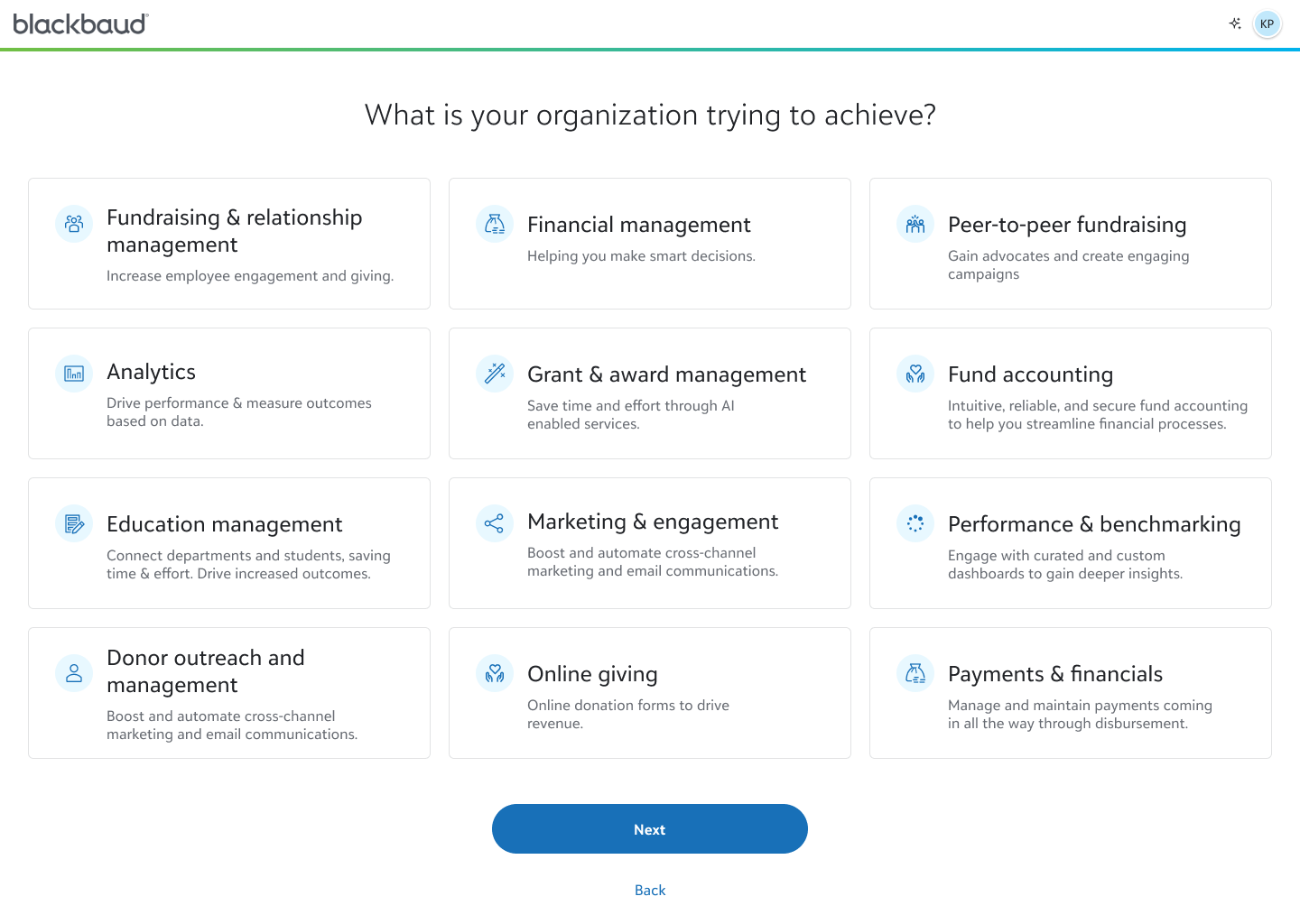
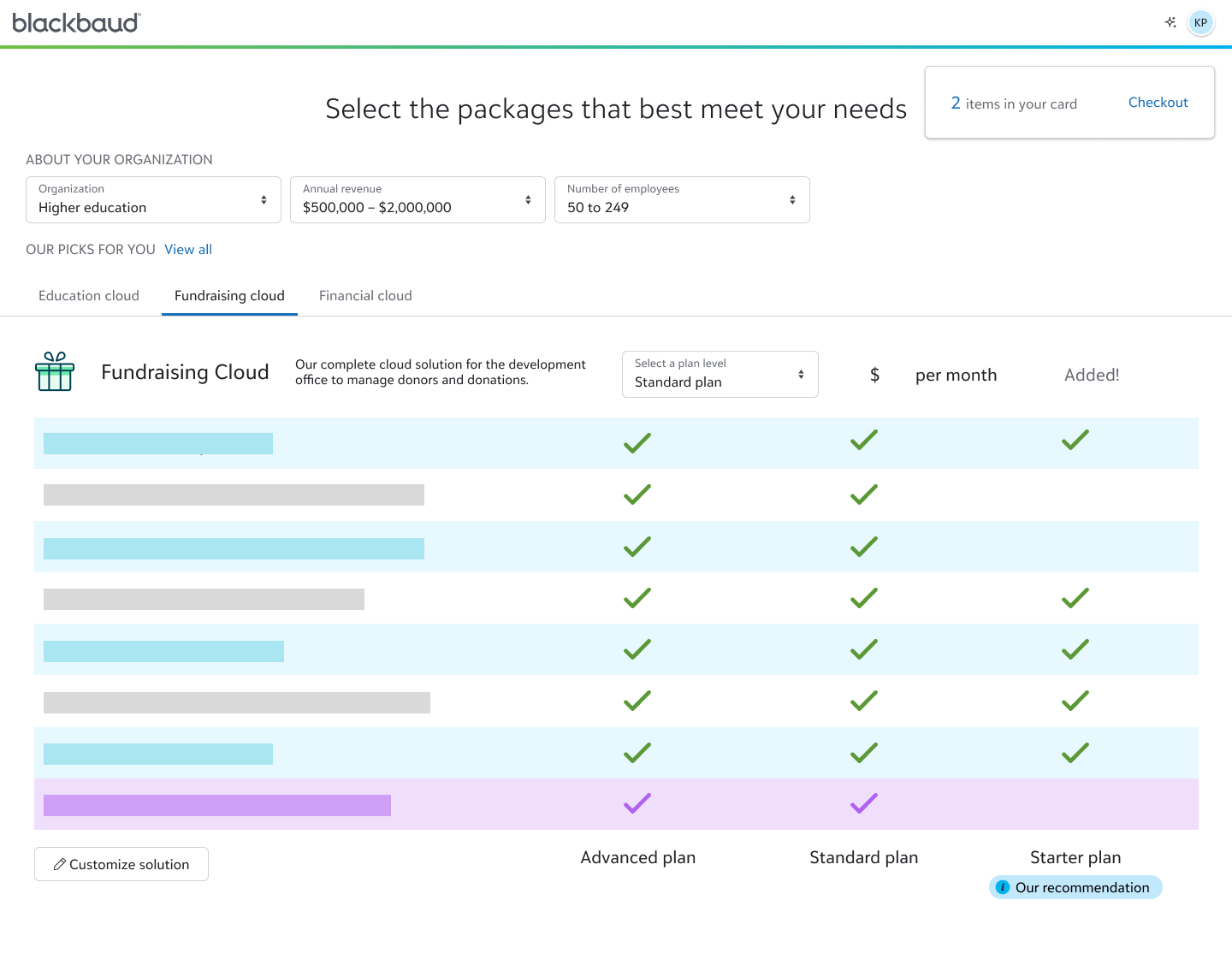
Design for discovery – Round 2
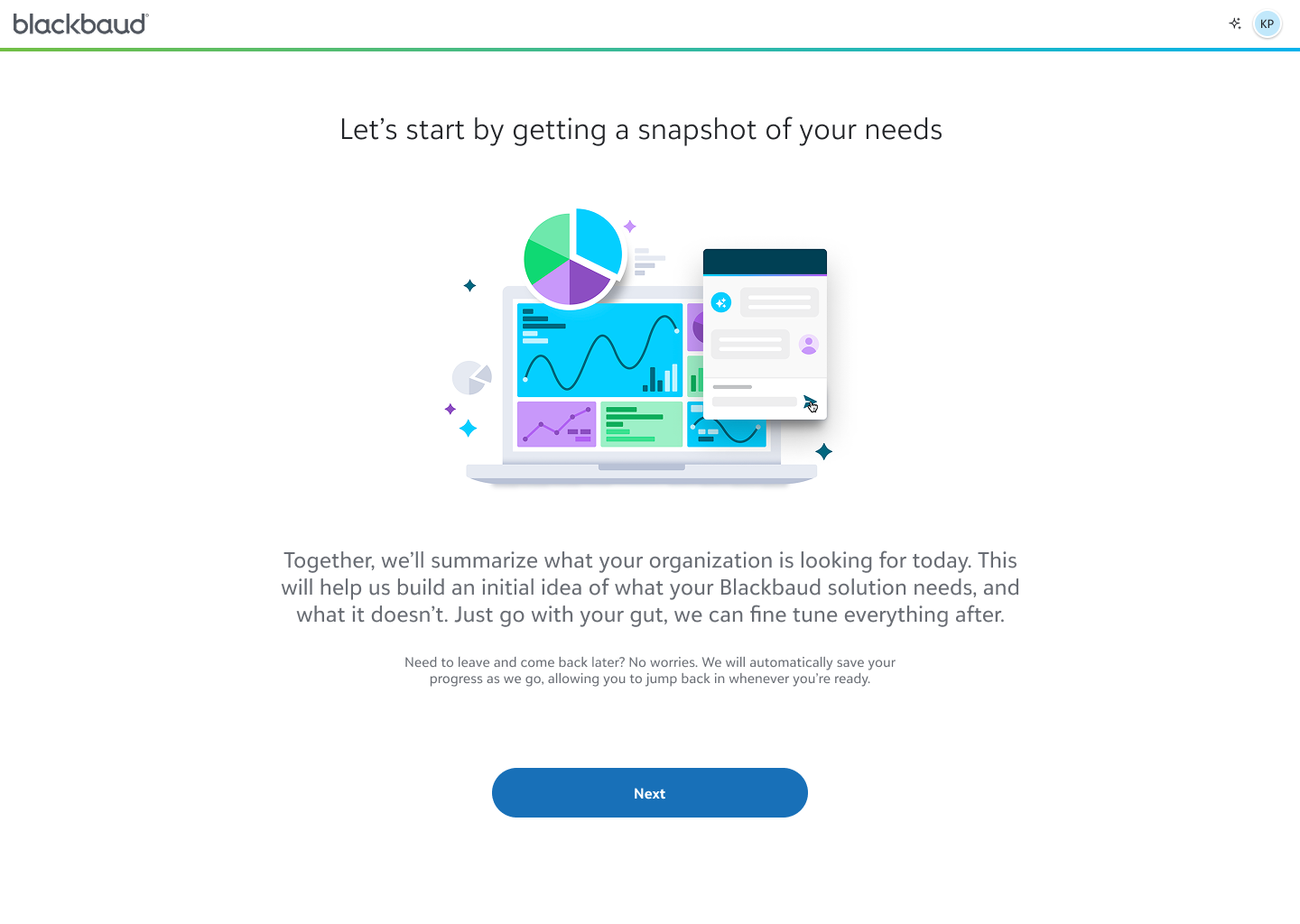
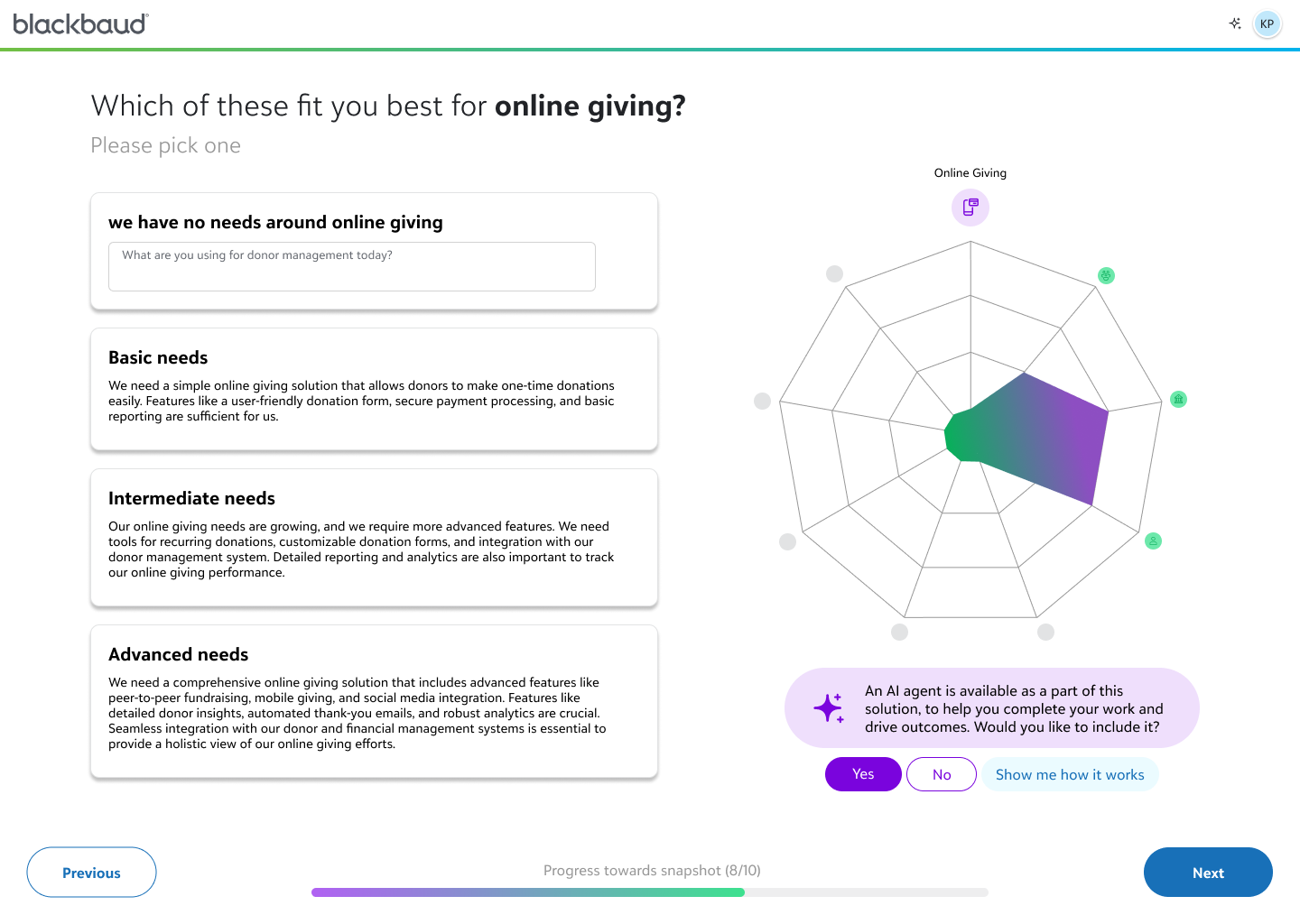
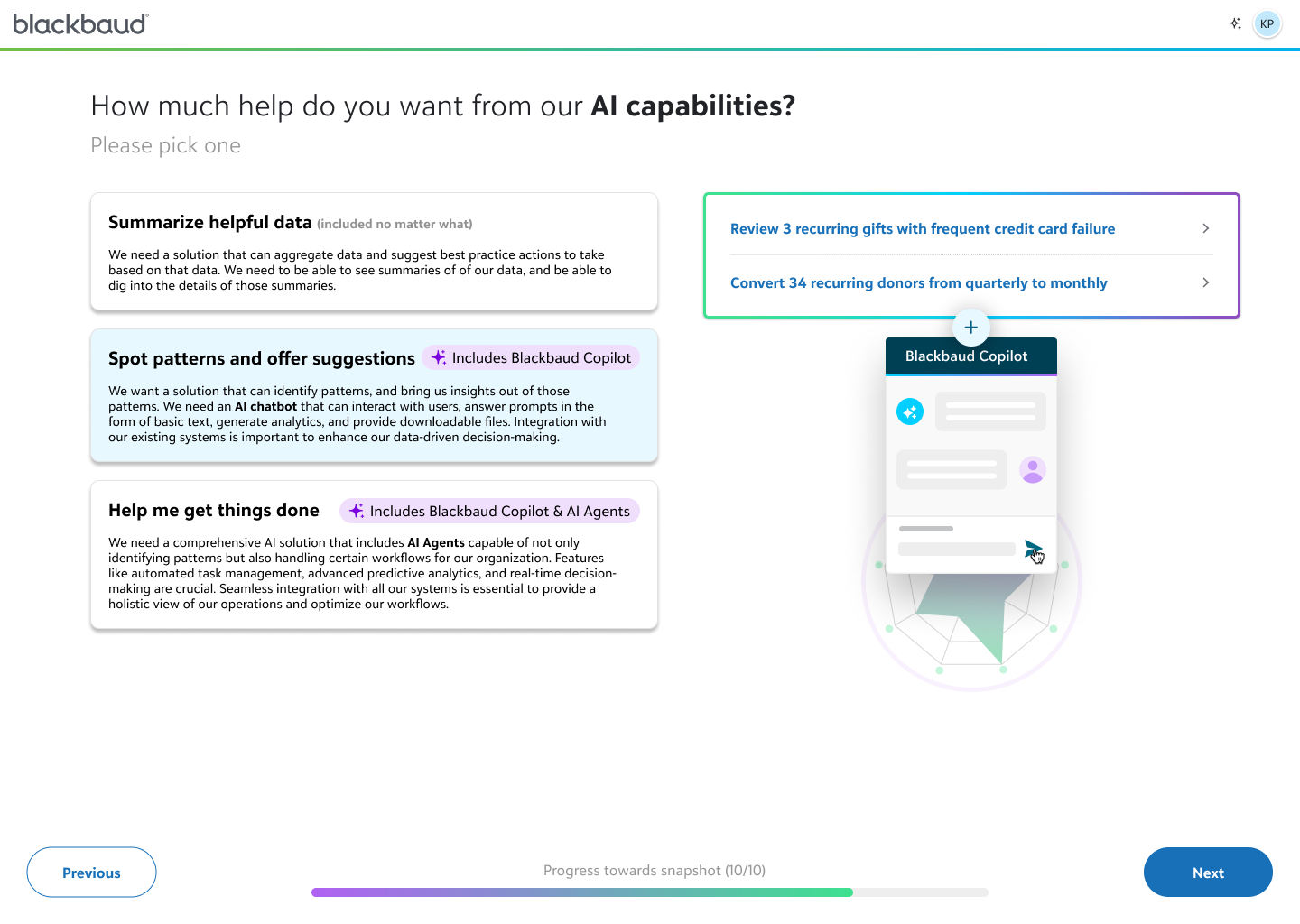
A second round of discovery continued pushing this work deeper, with a more fleshed out (but still highly conceptual) experience for stepping through each of our capability offers and determining what their organizations needs were. This work was happening at the same time Blackbaud was sinking its teeth into how the industry-shifting focus on AI might apply to our offerings and how we explain them to our customers. As a result we folded in two competing models of explaining AI to a prospective customer, and talked with participants to learn more about their current perception, where they see value, where they see risk, and what they actually want and need out of it.
Output
We were able to share the insights from these rounds of discovery with business leadership, including product management leadership, and sales leadership in charge of determining the set of pricing models for different levels of nascent artificial intelligence in our offerings.
We were also able to build a much larger body of data to support our growing set of insights around the advantages of more deeply connected systems, and use those to drive more stories like the donation to disbursement vision that catalyzed the latest round of this thinking within the organization. The connection of the donation through disbursement workflow is underway, and as a whole this work shifted organization thinking away from products made out of separate features and towards a model of one overarching solution made out of a dynamic set of capabilities, tuned to each organization’s needs.
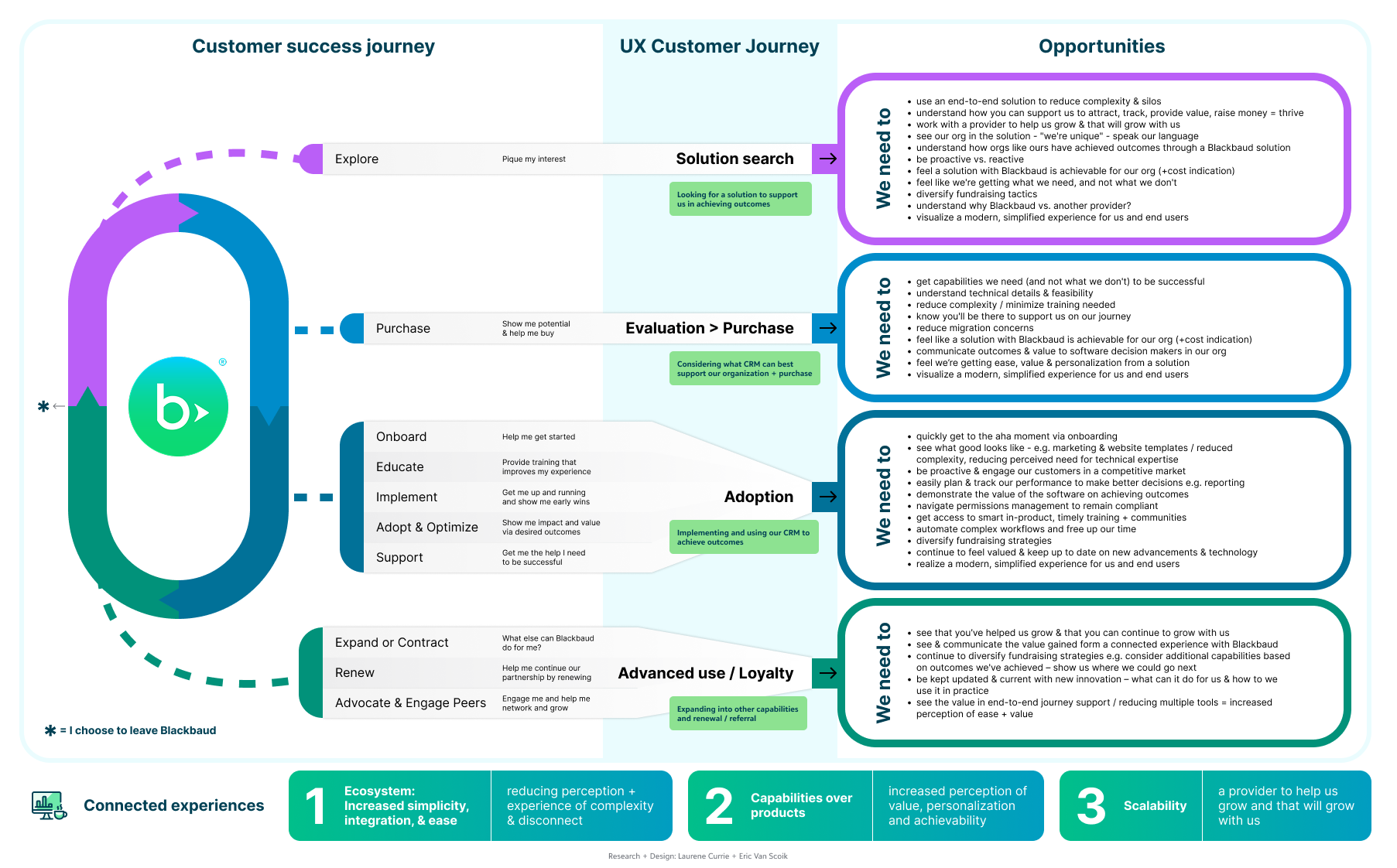
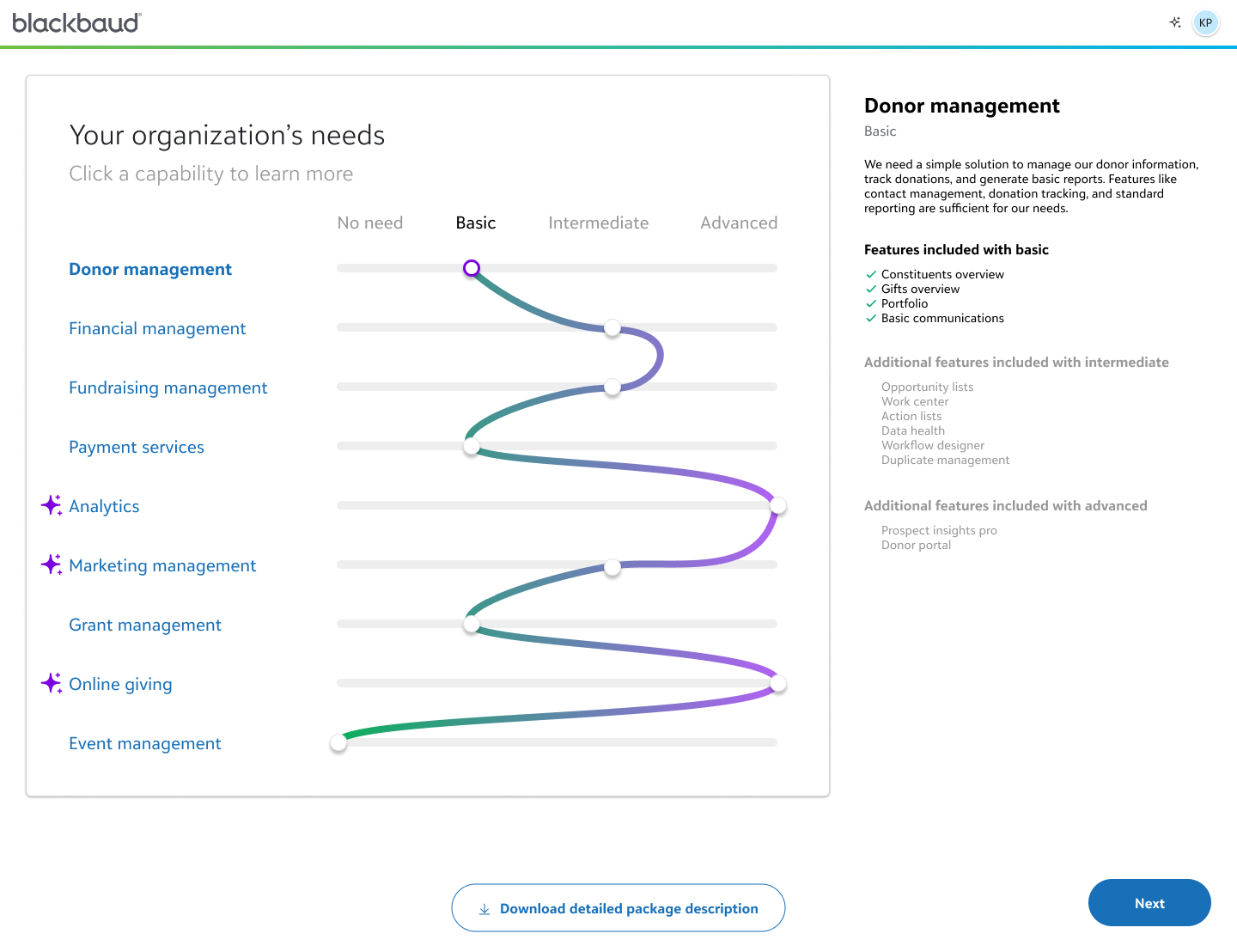
One of the artifacts from our output that we used to communicate our learnings to the rest of the business.